





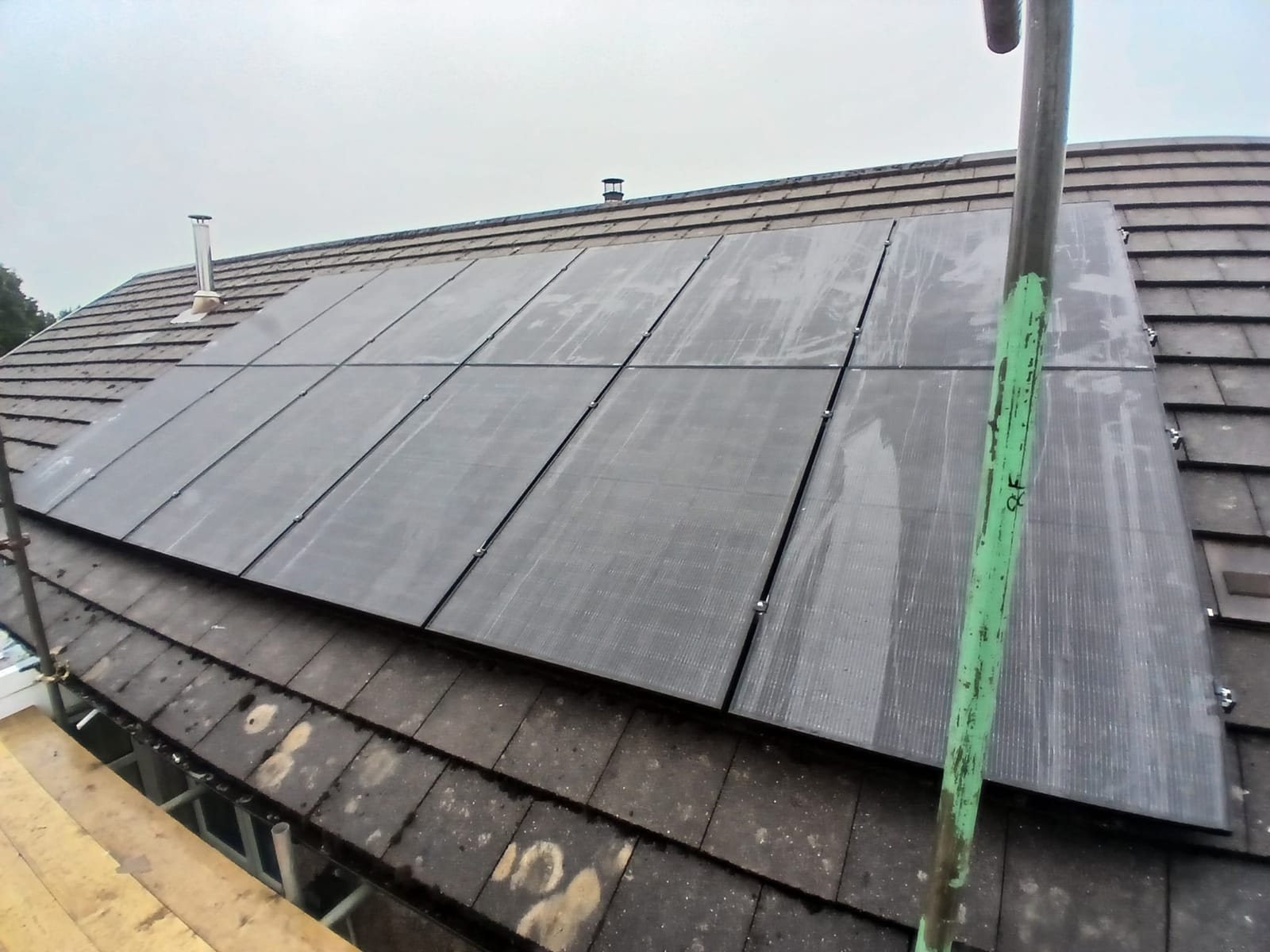
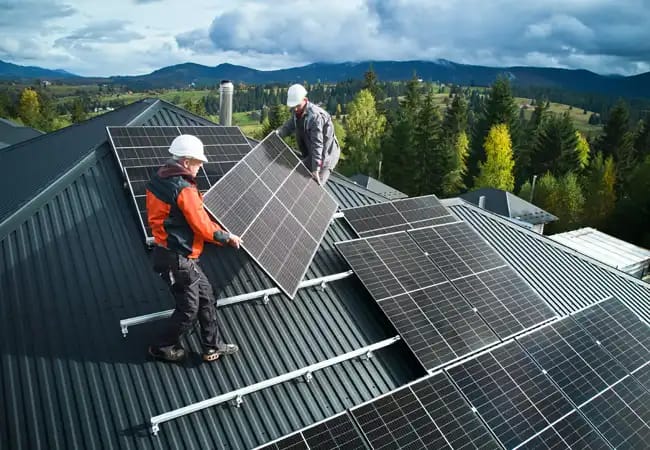
Solar panels for golf clubs that power the clubhouse, the course irrigation and the buggy fleet
Solar panels for golf clubs make commercial sense because a club uses electricity in exactly the pattern that panels generate it. The clubhouse catering, the bar, the function suite, the lighting and the heating and cooling all draw power through the day, the course irrigation pumps run hard through the summer, and a growing electric buggy and greenkeeping fleet charges in the middle of the day. That is a daytime demand curve few commercial sites can match, and on a rural estate with large clubhouse and greenkeeper-shed roofs it usually means more candidate surfaces for generation than a city-centre site will ever have. Most clubs also sit on their own constrained piece of grid, which makes self-generated power on site more valuable still, because the return on solar comes from using the electricity you make rather than exporting it for a few pence.
Why golf and country clubs suit solar so well
Electricity is now one of the largest controllable costs a club carries, sitting alongside greenkeeping and staffing, and unlike green fees or subscriptions it is a cost a committee can fix for two decades with a single investment. The clubhouse load, the bar and catering, the lighting and the HVAC, runs through the day, the summer irrigation pumping piles demand on at the very time the panels produce most, and the electrification of buggy and machinery fleets adds a fast-growing block of self-consumed daytime demand. Clubs also tend to own more than a clubhouse: greenkeeper sheds, machinery stores, outbuildings and frequently out-of-play land, all of which become candidate surfaces for rooftop or ground-mount generation. A visible array gives a member-owned or proprietary club a credible sustainability story that helps both member retention and recruitment, which matters when clubs across the country compete for the same pool of new members.
How we size a system for a club
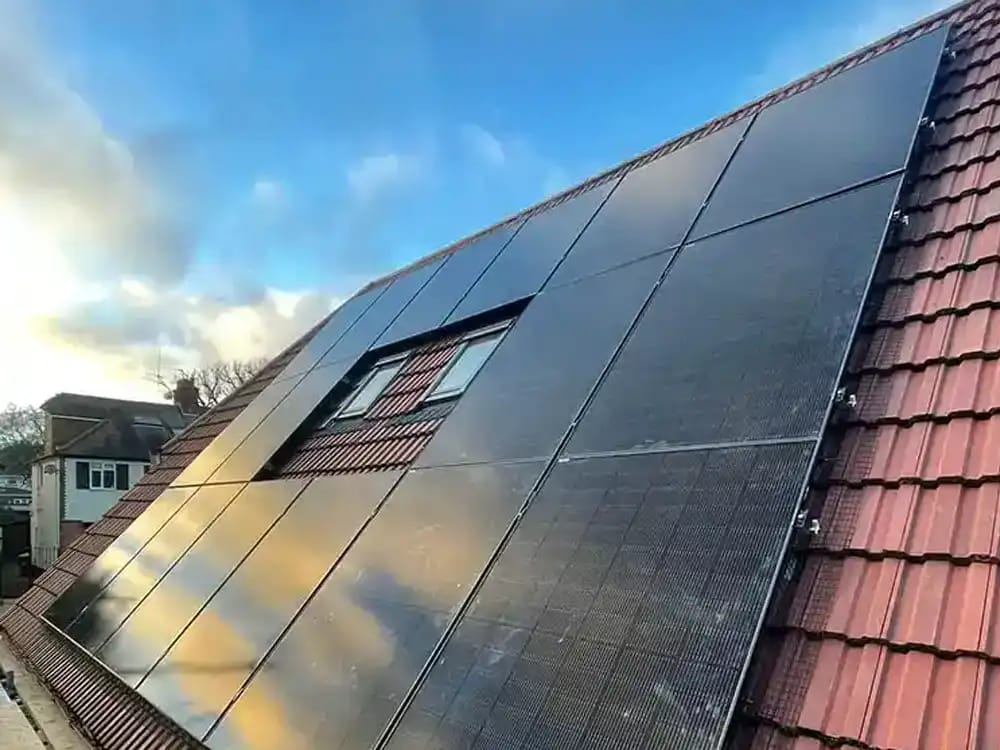
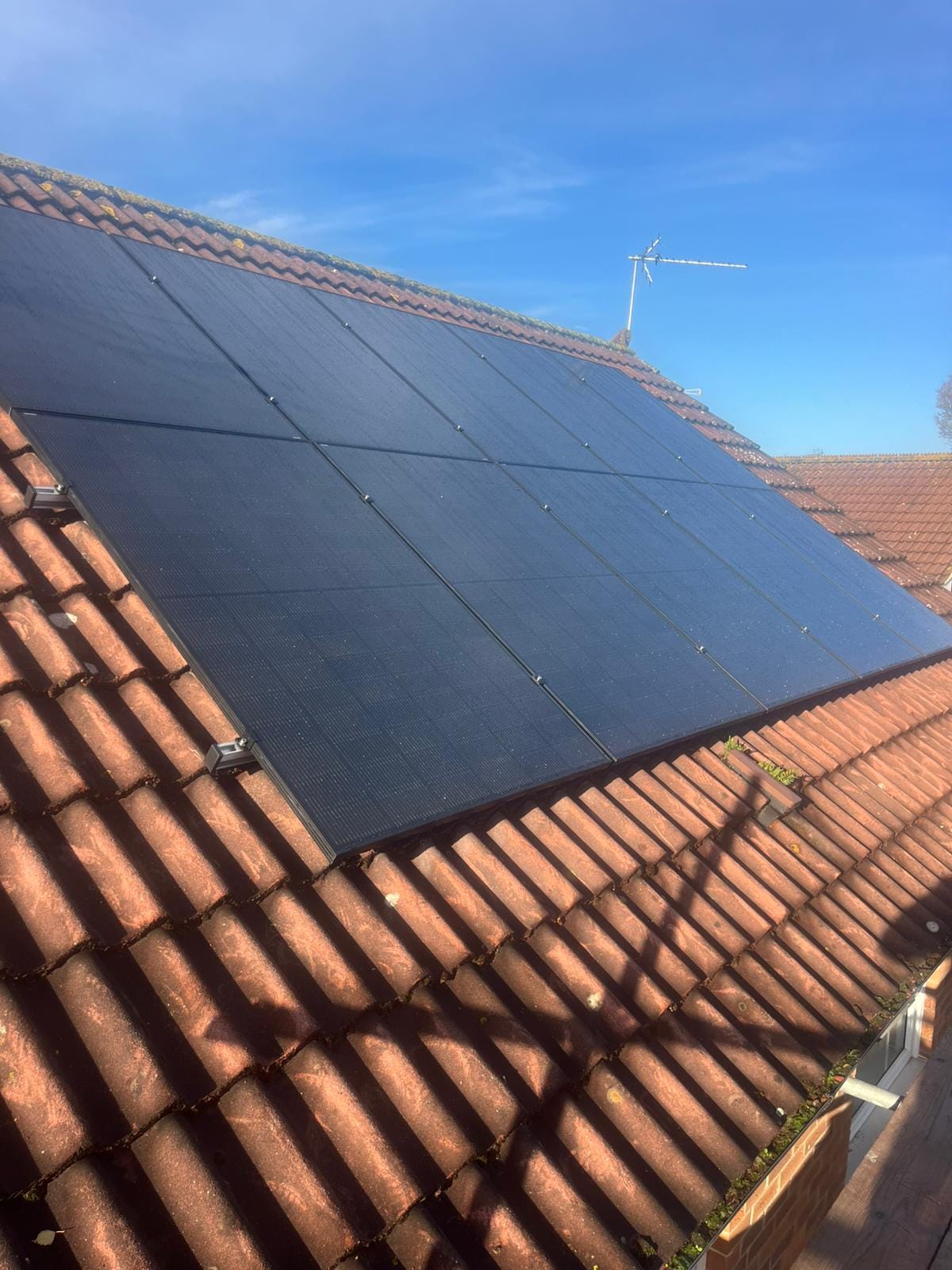
For a golf or country club we usually design a system in the 30 to 200 kW range, which is roughly 55 to 370 panels across about 200 to 1,200 square metres of clubhouse and outbuilding roof. A system that size generates in the region of 27,000 to 185,000 kWh a year and saves somewhere between 6 and 43 tonnes of CO2 annually. We never simply fill the roof. Sizing comes from at least twelve months of half-hourly meter data and the real shape of the club's day, because a busy clubhouse with a function suite and summer irrigation pumping has a very different load curve to a quieter members' club. Where the daytime load is strong we size aggressively toward self-consumption, and where the clubhouse roof is constrained we look at the greenkeeper sheds, outbuildings and, on larger estates, out-of-play land for a ground-mount array. We model any planned growth in buggy and machinery charging into the load before settling on a final size, because that demand sits squarely in the middle of the day and is the most valuable generation the system will produce.
Costs, payback and tax relief
A golf club project typically lands between £28,000 and £180,000 depending on clubhouse size, roof area and how many outbuildings come into the design, with a simple payback near 6 years and the electricity effectively free for the fifteen to twenty plus years after that. Tax relief is the lever that moves the case furthest. As a special-rate plant and machinery asset, solar PV can be set against profit in year one through the 100% Annual Investment Allowance on the first million pounds of qualifying spend, giving a club that trades as a business up to a quarter of the project value back in tax for a company. Full expensing is not open to solar, so above that cap we apply the Annual Investment Allowance or the 50% First-Year Allowance, and we spell that split out in the proposal so nothing surprises the committee afterwards. The cost guide sets out worked numbers for different club sizes and compares the capital, PPA and asset-finance routes side by side.
Funding routes for a club
The cornerstone for most clubs is the Annual Investment Allowance, which covers the first million pounds of qualifying expenditure at 100%, so a single-site clubhouse install is almost always fully expensed in the first year. The Smart Export Guarantee then pays a supplier-set rate, typically in the range of 4 to 15p per kWh in 2026, for power you export, and because clubs often export at weekends and out of the playing season, when the irrigation load falls away, it can be a meaningful part of the picture; the rates are not capped or regulated, so it pays to shop around, and you will need a smart meter recording half-hourly export to claim it. If the club is adding charging for an electric buggy fleet or for members and staff, the Workplace Charging Scheme can fund a large share of the chargepoint cost: from 1 April 2026 it pays £500 per socket, up to £20,000 per applicant, covering up to 75% of purchase and installation cost and capped at 40 sockets, and it pairs directly with on-site solar because daytime charging self-consumes generation. The scheme has been extended for a final year and closes permanently on 31 March 2027, so applications should go in well before then. For a club with a public pool or wider council or trust-run leisure facilities, the Swimming Pool Support Fund in England has part-funded solar and other efficiency measures, though it is aimed at public leisure facilities rather than private clubs. The funding routes page sets out each scheme and who qualifies, and we map and apply for the right combination so the work does not land on the committee.
Compliance and sector considerations
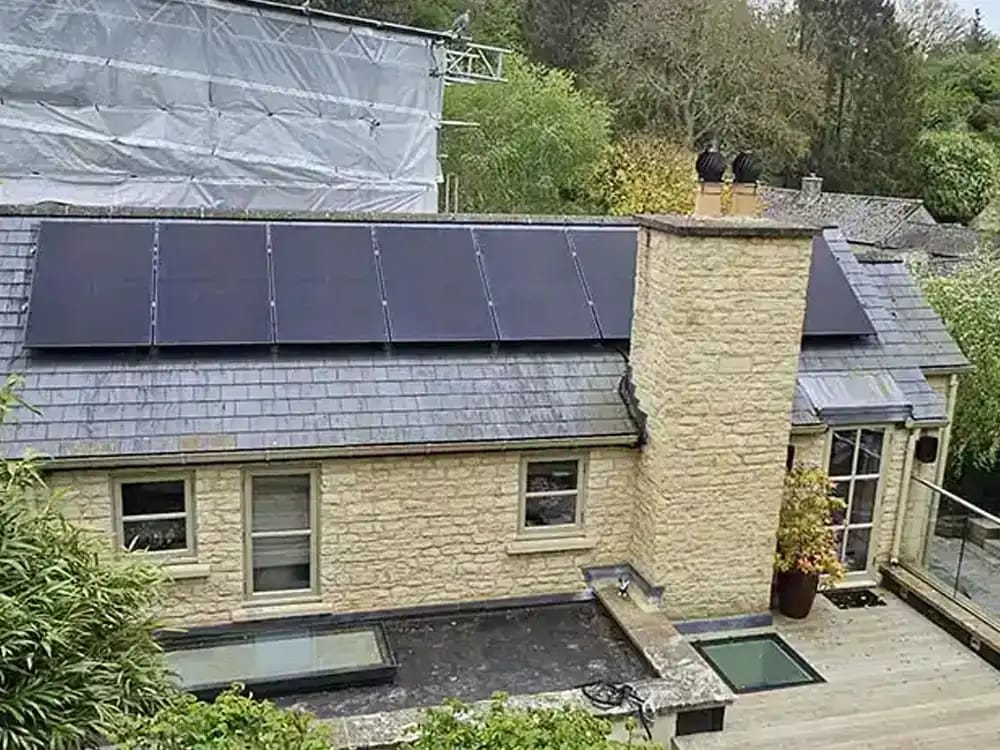
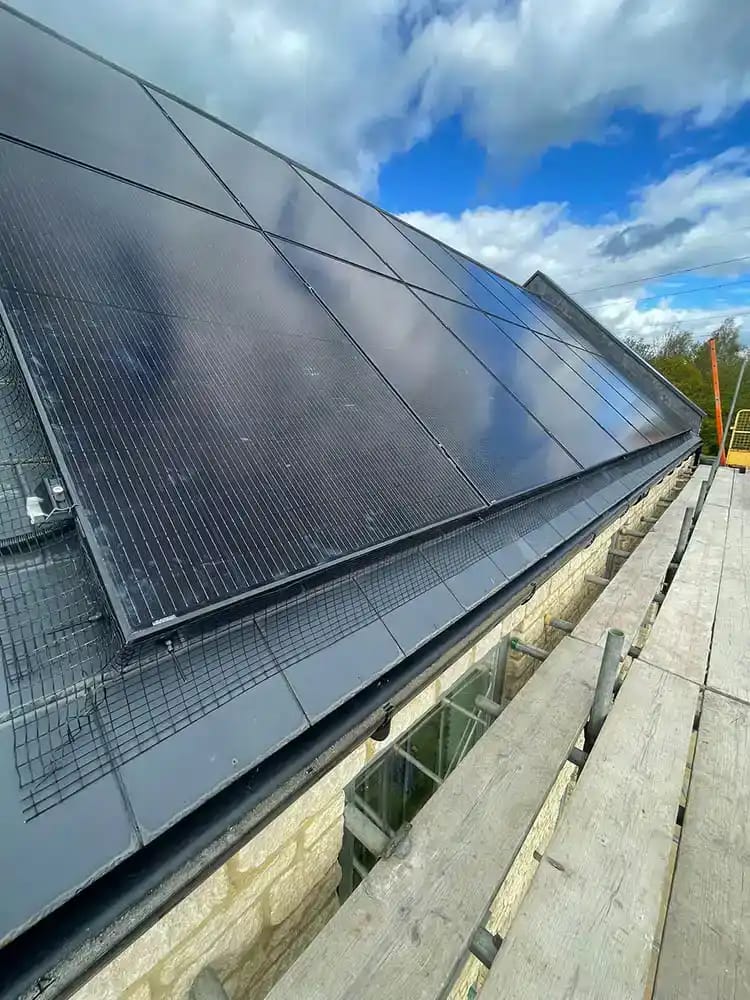
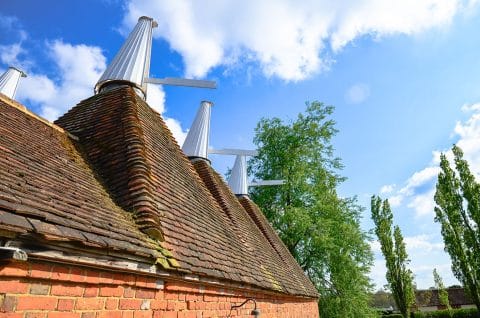
Many clubhouses are older or part-listed buildings, so Listed Building Consent and conservation-area checks may apply, and on a rural estate inside an Area of Outstanding Natural Beauty or national park the planning view can be more sensitive again. Where consent is needed we engage the conservation officer early and design around protected frontages, using roof slopes hidden from public view, low-profile all-black panels, or outbuilding roofs that avoid the protected elevation entirely. Rooftop PV on commercial buildings is generally covered by Permitted Development Rights under Class A Part 14 of the GPDO 2015 within size limits, but listed buildings and conservation areas are excluded, and ground-mount on rough or out-of-play land may sit above permitted-development thresholds and need full planning permission. A G99 application is required for connections above 17 kW per phase, and on a capacity-constrained rural network the DNO connection can take six to eighteen months, which is usually the longest item in the programme, so we start it early. Member-owned clubs also typically need a committee or AGM mandate for capital spend, so we build the proposal in a form the committee can take to a vote, with the numbers, the funding options and the risks set out plainly. We hold MCS commercial certification for Smart Export Guarantee eligibility, along with NICEIC or NAPIT electrical accreditation, RECC and TrustMark membership, and the install is delivered to the relevant standards including BS 7671 and, where the project is large enough, CDM 2015.
How we approach the project
We start from the meter, not the roof. We pull at least twelve months of half-hourly data so the system is sized to the club's real daytime load, including the summer irrigation peak and any growth in buggy and machinery charging, and we assess every surface, the clubhouse, the greenkeeper sheds, the outbuildings and any out-of-play land, rather than just the obvious roof. Before we quote a fixed price we check the roof build-up and look for asbestos cement sheeting, which is common on older outbuildings and cannot take panels until it is replaced, so there are no surprises on the day. We submit the G99 grid application early, alongside the structural survey, so the clock starts straight away rather than after the contract is signed. The proposal is a single fixed price, the workmanship is covered by an insurance-backed warranty, and after commissioning we provide annual operation and maintenance, including electrical inspection, inverter firmware updates and a panel wash where needed, plus 24/7 remote monitoring with automated underperformance alerts, so the committee can see live generation, lifetime kWh and CO2 saved. A rooftop install almost never requires closure; the only outage is the final grid connection, typically four to eight hours, which we book for a quiet period.
An illustrative example
As an illustrative composite based on typical UK golf club projects, and not a real named client: a member-owned parkland club with a busy clubhouse, a function suite and summer course irrigation installed around 120 kW across the clubhouse and greenkeeper-shed roofs, roughly 220 panels generating in the region of 110,000 kWh a year. With the bar, catering and irrigation drawing through the day, self-consumption was high, the qualifying cost was written off in year one under the Annual Investment Allowance, and the payback came in close to six years. Two chargepoints for the buggy fleet were added under the Workplace Charging Scheme, and a live-generation figure was shared with members as part of the club's sustainability message. The numbers are illustrative only and depend entirely on your club, its load profile, the roof and the tariff, which is exactly why we model every club from its own meter data.
If your club also runs a gym, spa or country-club leisure offer, or a clubhouse bar and kitchen that effectively trades as a pub in its own right, our pages on solar for gyms and health clubs and solar for pubs, restaurants and hospitality venues apply too. When you are ready, see the cost guide, the funding routes, read the golf club solar FAQs, or request a free feasibility from your meter data.